



Yesterday, during a pleasant evening stroll, my partner and I couldn’t resist stopping for a refreshing beer on the summer terrace of a local bar. A habit from our “old” days... As we sat there sipping the chilled beer, my partner began reflecting on where the true masculine spark, drive, and muscle strength have vanished from today’s world. Looking around, it seemed to him that men today are losing their masculinity all too quickly and putting on those notorious round “beer bellies” far too easily.
One might attribute this to age, stress, or simply “the times”. However, modern endocrinology and biochemistry provide a much more precise answer. It’s not psychological; it is pure biology and the environment in which the modern man “swims” daily.
Today, we will look at how the favorite “liquid bread” triggers an invisible hormonal robbery in the male body, what an infamous biochemical parasite is doing inside of it, and how the Golden Flow protocol restores a man’s true biological strength.
The Hormonal Robbery Called Aromatization: How the Male Body Loses Its Essence
It might surprise you that the male body naturally needs a small amount of the female hormone estrogen - for instance, for bone health, blood vessel elasticity, and proper memory function. However, since men lack ovaries, they must produce this estrogen from what they do have: their primary male hormone - testosterone.
A specialized enzyme called aromatase is responsible for this chemical conversion [1].
How does it work? A testosterone molecule encounters the aromatase enzyme. The enzyme chemically alters its structure (converting its A-ring), and a fully formed molecule of the female estrogen (estradiol) emerges on the other side [1].
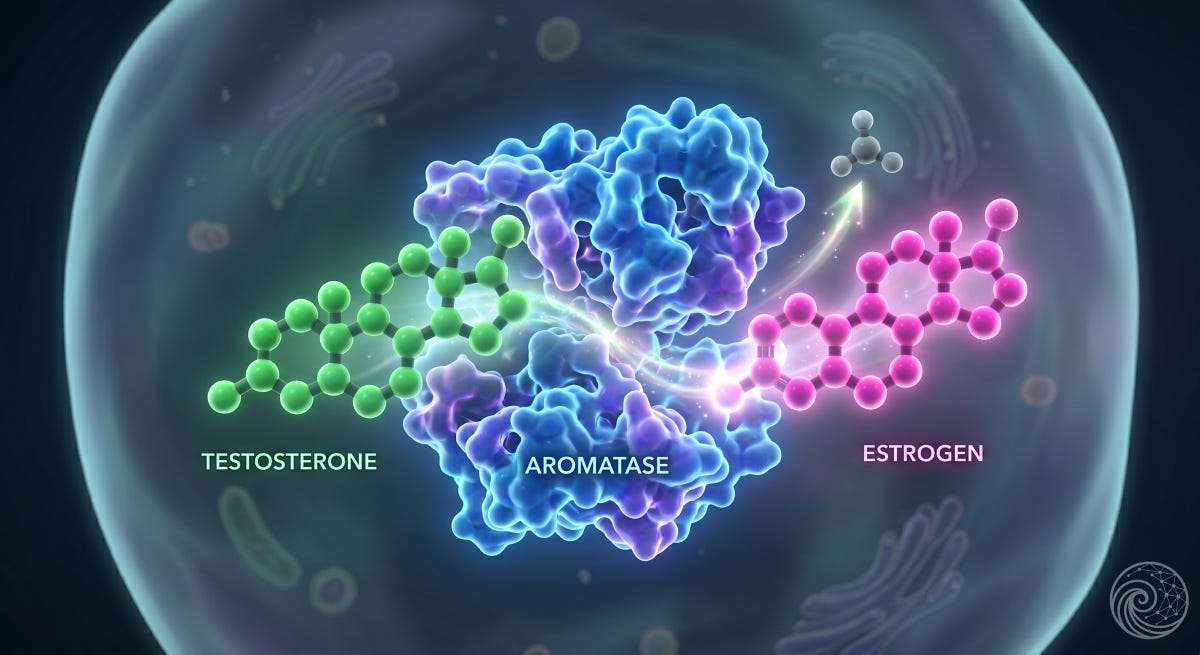
As long as this process runs in a healthy, minimal capacity, everything is fine. The crisis occurs the moment aromatase goes haywire and begins stealing testosterone on a massive scale. The body cannot convert estrogen back into testosterone. It is a one-way street where a man loses his very essence.
What Does a Man Actually Need Testosterone For?
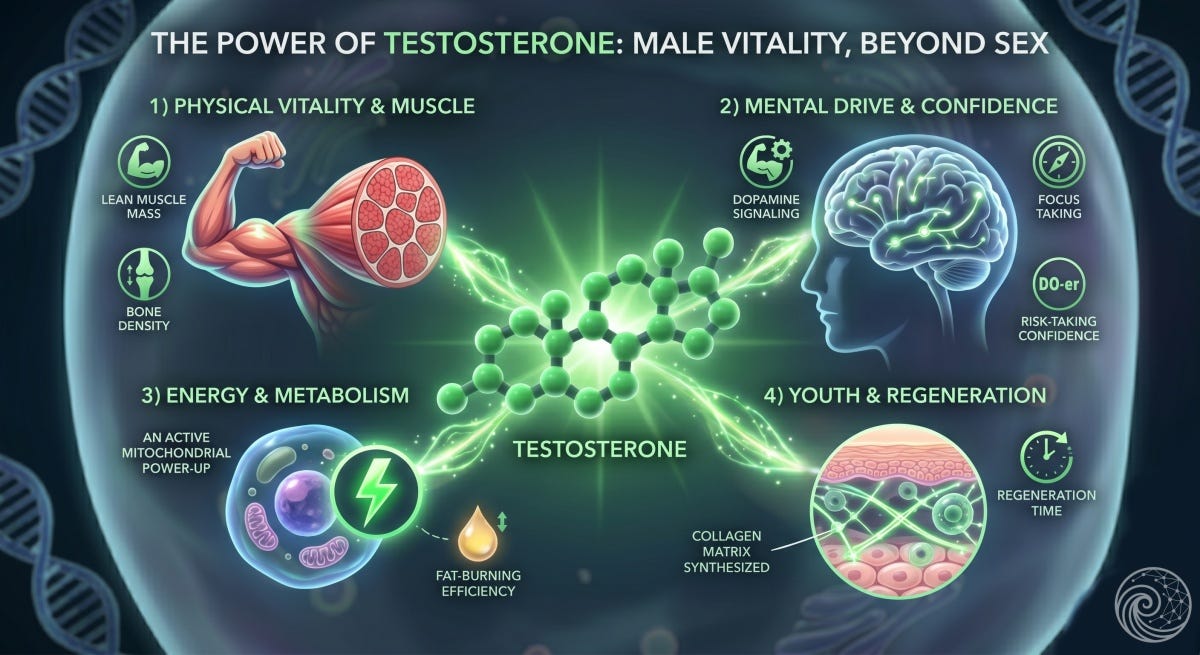
Testosterone is not just a hormone for “sex and muscles”. It is the primary engine of male vitality, health, and longevity, governing three critical areas:
The Physical Body: It stimulates protein synthesis, directly building dense muscle mass and bone density, while acting as a natural fat burner—especially in the abdominal area [2]. Without sufficient testosterone, a man will not maintain muscle, even if he leaves his soul in the gym.
Mind and Brain: Testosterone drives the dopamine system [3]. It gives a man confidence, drive, the ability to take risks, focus, and achieve goals (the mental drive). A man with low testosterone sinks into lethargy, indecisiveness, brain fog, and depression.
Hormonal Youth: It stimulates collagen production, firms the skin, and participates in the rapid repair and regeneration of cells throughout the body [4]. To put it bluntly: testosterone keeps a man young.
Three Modern Traps Turning Aromatization into a Wildfire
What causes the natural process of aromatization to accelerate into an uncontrollable blaze that robs men of their masculinity?
1. Visceral Fat: When a Devoted Protector Becomes a Metabolic Parasite
Intra-abdominal (visceral) fat surrounding the organs is not just passive blubber for the winter. In reality, it is a highly active endocrine (hormonal) organ that originally developed as our ally and protector. The problem occurs when our modern lifestyle (constant insulin bombardment and stress) overloads it and throws it out of balance.
Once this tissue grows to unhealthy proportions, it switches to survival mode and begins acting like a metabolic parasite [5]. (We analyzed the exact anatomy of this process in our deep-dive, Visceral Fat: The Organ They Didn’t Teach Us About in School). It contains the body’s largest reserves of the aromatase enzyme! In an overloaded state, it triggers a dangerous vicious cycle: it produces massive amounts of aromatase, which steals male testosterone to manufacture female estrogen. Higher estrogen then slows down the metabolism and signals the body: “Store more fat on the belly and chest.” This tired and enlarged fat tissue does everything it can to create an ideal estrogenic environment for its own survival - even though it strips the man of his masculine foundation. It doesn’t need our anger; it needs help through the Golden Flow protocol to return to its natural, healthy size.
2. The Insulin Whip and the Beer Load
Constant snacking, sugar, industrial foods, and white flour keep the hormone insulin permanently elevated. And insulin acts as a direct biochemical accelerator of aromatase activity [6]. It acts as a whip, commanding the enzyme: “Work faster, convert testosterone to estrogen!”
Where does beer fit into this? Due to its malt sugar (maltose), beer has an extremely high glycemic index (higher than pure sugar). Every beer skyrockets insulin, instantly activating aromatase within the visceral fat, causing you to build that notorious round “beer belly” while losing testosterone in real time.
Furthermore, the hops in beer contain one of the most potent plant estrogens (phytoestrogens) in the world - 8-prenylnaringenin - which directly mimics estrogenic activity [7]. (Did you know that historically, female hop-pickers routinely suffered from menstrual cycle disruptions just from handling hops with their bare hands?)
3. Xenoestrogen Paralysis: False Keys in the Cells
We live in a chemical age. Parabens in cosmetics (shampoos, shower gels, deodorants), plastics, chemicals in cleaning agents, and residual hormones from birth control in the municipal water cycle - all of these are xenoestrogens [8]. They possess a chemical structure nearly identical to human estrogen. When they enter a man’s body, they act as false keys that fit perfectly into the estrogen receptors (locks) in the cells.
The brain receives a deceptive signal that the body is flooded with estrogen. Consequently, the pituitary gland immediately shuts down the transmission of the signal (luteinizing hormone - LH) to the testes to stop testosterone production [8]. The production of the body’s own hormone is completely paralyzed. The body cannot convert these synthetic chemicals into anything useful - the liver must laboriously capture, neutralize, and excrete them via bile. If the liver is overwhelmed, xenoestrogens accumulate in fat cells, where they cause harm for years.
The Hidden Truth About Testosterone: Only the FREE Hormone Matters
Many men have their “total testosterone” measured in a lab and relax if it falls within the normal range. However, this is a major biochemical mistake. Testosterone travels through the male body in two primary forms:
Bound Testosterone (approx. 97-98%): Pervasively locked inside a transport protein called SHBG (Sex Hormone-Binding Globulin) [9]. In this form, it is inactive, dormant, and the body cannot use it to build muscle or drive motivation.
Free Testosterone (only approx. 2-3%): This is the real magic component [9]. Only free testosterone can enter muscle cells, burn visceral fat, and fuel the brain.
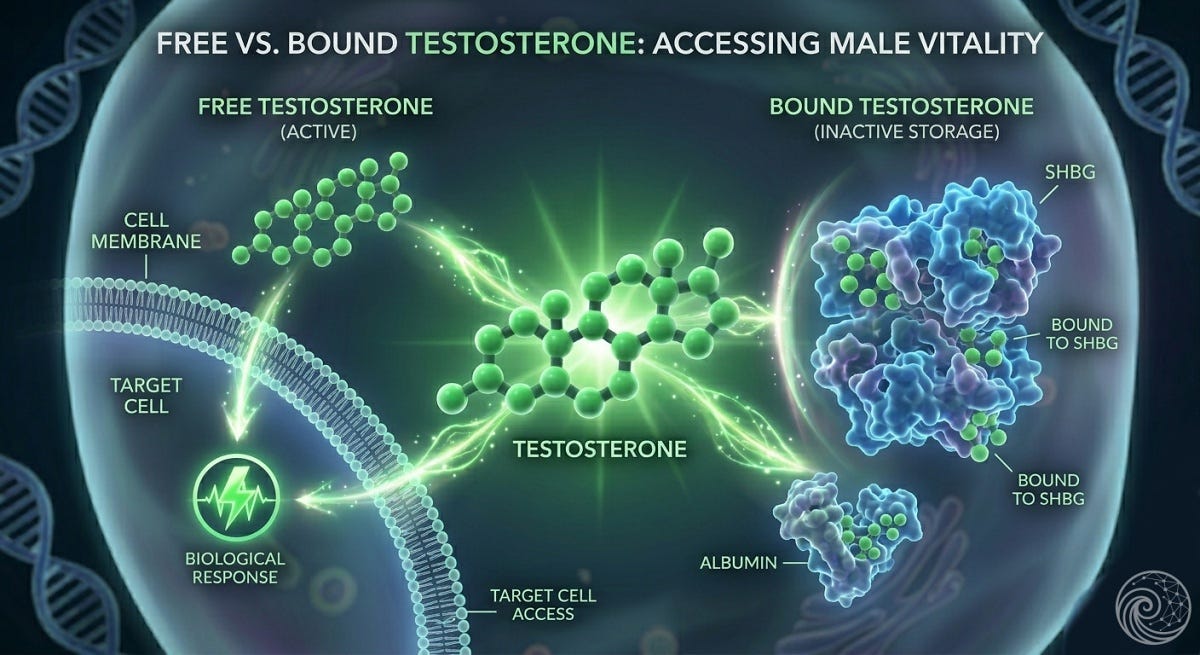
You may have plenty of total testosterone, but if your SHBG protein is sky-high due to poor lifestyle choices, your free testosterone hits rock bottom, and you experience all the symptoms of hormonal depletion. Fortunately, we know exactly how to break these chains.
The Golden Flow Manual: Rebooting Testosterone from Scratch
The body possesses an inherent code to return to perfect harmony (homeostasis). We simply need to provide the correct building blocks and release the stress brake.
1. Cholesterol is King (The Raw Material)
All steroid hormones, including testosterone, are manufactured in the body exclusively from cholesterol [10]. If a man switches to a low-fat diet, his testosterone collapses. Furthermore, when we are under chronic stress (or metabolic inflammation from sugar), the body executes a cortisol shift - it hijacks the available precursor pool to produce the stress hormone cortisol for survival, because evolutionary survival always takes precedence over muscle and reproduction [11].
What to include: High-quality animal and stable fats – egg yolks (the absolute king of dietary cholesterol), real grass-fed butter, ghee, tallow, and coconut oil.
2. Zinc & CoQ10: The Biochemical Igniters (Which Meat to Choose)
Dietary fat is the structural brick, but you need the biochemical workers to build the hormone. This is where meat quality enters the equation. We do not look at meat purely for cholesterol, but as the ultimate bioavailable delivery system for Zinc and Coenzyme Q10, which act as mandatory cofactors for testosterone production and testicular mitochondrial health [12].
Which meat to choose: Fatty, grass-fed cuts of beef and lamb are ideal because they provide the perfect saturated fat profile to support hormone synthesis without raising systemic inflammation.
The Holy Grail: Organ meats (especially grass-fed beef liver, chicken liver, and hearts). They serve as nature’s most potent multivitamin, packed with highly bioavailable zinc, copper, B-vitamins, and CoQ10, which directly fuel the Leydig cells in the testes.
3. Switching Off Aromatase (The Mushroom Shield)
You already know that visceral fat acts like a parasite, using the aromatase enzyme to steal testosterone and turn it into estrogen. But you can actively sabotage this process at the dinner table. Certain foods act as natural, non-pharmaceutical aromatase inhibitors, effectively locking down the enzyme so your testosterone stays untouched [13].
The Ultimate Weapon: Not all mushrooms are created equal in this fight. While exotic medicinal mushrooms excel in immunity, the humble white button mushroom and its siblings (cremini and portobello) are the undisputed kings of aromatase inhibition. They contain specific fatty acid derivatives that block the enzyme’s active site, preventing the feminization of male biochemistry [13].
Action Step: Include cooked mushrooms in your weekly rotation - they act as a structural shield for your masculine hormones.
Stop guessing. Start biohacking. Join thousands of high-performing individuals who treat their body as an evolutionary masterpiece.
4. Flushing Out Excess Estrogen (The Cruciferous Detox)
It is not enough to stop the production of estrogen; a man must also efficiently eliminate the toxic, recycled estrogen and xenoestrogens accumulated from the modern environment. This is the job of the liver, and you can supercharge this detoxification pathway via specific compounds known as Indole-3-Carbinol (I3C) and DIM (Diindolylmethane) [14].
The Ultimate Weapon: Cruciferous vegetables - broccoli, Brussels sprouts, cabbage, kale, and cauliflower. These greens turn on the liver’s Phase II detoxification, converting aggressive estrogens into safe, water-soluble metabolites that the body can easily flush out.
Action Step: Never skip your greens. Steam them or light-saute them in ghee to maximize nutrient absorption.

5. Unlocking the Shackles: Freeing Bound Testosterone (The Beetroot & Magnesium Nitro)
As you saw in our Free vs. Bound Testosterone infographic, around 98% of your testosterone is locked away by SHBG and albumin proteins, leaving only 2% to actually build muscle and drive your focus. To break these chemical shackles and increase your free, biologically active testosterone, you need specific biochemical keys: Boron and Magnesium.
The Ultimate Weapon: Beetroot (nature’s nitric oxide and boron powerhouse) and magnesium-rich foods (pumpkin seeds, dark chocolate, wild-caught seafood). Boron directly down-regulates SHBG, effectively raising free testosterone levels [15], while magnesium binds to SHBG instead of testosterone, leaving more free hormone available to penetrate your cells [16].
Action Step: Drink raw beetroot juice before workouts and supplement with high-quality magnesium (Glycinate or Malate) before bed to unlock your latent vitality.
6. Activating the Signal: Vitamin D3 (The Master Solar Switch)
Vitamin D3 is not actually a vitamin, but a potent steroid hormone (specifically a secosteroid) [17]. The Leydig cells in the testes that manufacture testosterone possess direct receptors for Vitamin D3 (VDR), meaning your masculine vitality is directly hardwired to the sun. If a man is deficient in this master hormone—which applies to almost everyone in modern latitudes—the cells fail to receive the vital intracellular signal to initiate testosterone synthesis. D3 is literally the starter switch for the entire process [17].
The Solar Connection: As we thoroughly analyzed in our previous deep-dive on The Sun as Your Own Sunscreen, solar UVB radiation is the only biological key that unlocks the synthesis of Vitamin D3.
The Genetic Shield: Once unlocked by solar UVB, this master hormone migrates directly into the cell nucleus. Unlike standard vitamins, it actively regulates the expression of over 2,000 genes, orchestrating a monumental shield for your immune system, DNA protection, and testicular mitochondrial health.
Action Step: Optimize your Vitamin D3 levels through strategic, mindful sun exposure during peak UVB hours (without burning!), or biohack your winters with high-quality Vitamin D3 supplemented alongside K2 and magnesium to keep the testosterone factory running year-round.
More Masculine Alternatives: What to Drink to Maintain Strength?
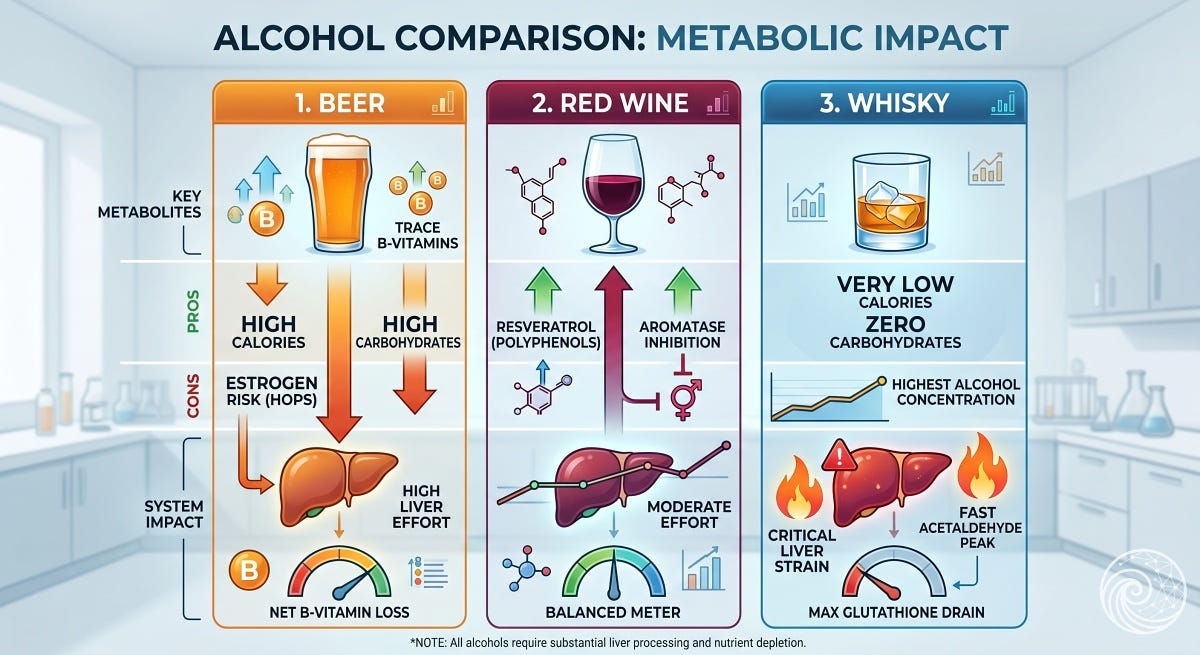
Returning to our beer conversation: if a man wants to unwind, beer is the absolute worst alcoholic choice for his masculinity due to its combination of phytoestrogens and insulin shocks. What are the superior options from a biochemical standpoint?
Dry Red Wine: An excellent choice. It contains virtually no carbohydrates (zero insulin impact) and boasts the antioxidant resveratrol. In biology, resveratrol is known as a potent natural aromatase inhibitor [18]! Unlike beer, a glass of quality red wine suppresses aromatization and helps protect testosterone.
Clean Quality Spirits (Gin, Tequila, Mezcal, clean Whisky) with soda and lime: These have zero insulin impact. While the liver must still process the alcohol, the body avoids the massive carbohydrate and estrogenic blow delivered by beer.
How the Liver Cleans Up After Alcohol
When a man (or woman :)) consumes alcohol, it throws an immediate metabolic emergency brake on the liver. Alcohol (ethanol) is a pure toxin to the body; it cannot be stored anywhere. The liver suspends all other operations (including fat burning and estrogen clearance) and directs all energy toward a rescue mission:
The enzyme ADH converts alcohol into acetaldehyde - a brutal toxin that is up to 30 times more poisonous than alcohol itself [19]. This is what damages cells and causes morning headaches and hangovers.
The enzyme ALDH and the antioxidant glutathione must rapidly convert this poison into harmless acetate (vinegar), which the body breathes out and excretes [19].
This process is incredibly expensive for the liver, draining massive reserves of B-vitamins (particularly B1 and B3) and hydration. People often claim beer hangovers are milder because beer contains B-vitamins from yeast (which is partly due to the large volume of water consumed with it). However, the reality is that the liver burns far more B-vitamins metabolizing beer than the beverage could ever supply [20]. You are always left in a deep metabolic deficit. If a man drinks beer regularly, his liver remains depleted, fails to filter out circulating old estrogens, and these continue to suppress testosterone.
In alcohol quality, the same rule applies as with food: we select the cleanest available options without added sugars or chemical accelerators, while systematically tuning the body and liver to handle occasional celebrations without losing hormonal balance.
Nighttime Recovery Biohack: What to Do After the Pub?
If a man (or you) has already “sinned” and had those three beers or drinks, do not leave the liver and hormonal system to suffer all night. The body requires immediate metabolic support, which can be managed preventatively or as acute nighttime aid:
Long-Term Storage Biohack (Pre-event tuning): Want your liver prepared for an occasional indulgence? Regularly eat eggs, garlic, onions, broccoli, and beef. These foods contain sulfur and the amino acid cysteine - the direct building blocks for glutathione, the liver’s most powerful antioxidant [21].
Intelligent Snacking Biohack (While drinking): If you snack alongside a drink, skip the chips or crackers (a carbohydrate nightmare that uses insulin to crush testosterone). Choose hard, real cheeses (like Parmesan), beef jerky, or walnuts and almonds. Healthy fats slow alcohol absorption in the stomach, shielding the liver from a sudden shock, while amino acids supply the liver with raw materials to neutralize acetaldehyde [22].
Mineral Infusion (Upon arriving home): In half a liter of water (ideally highly mineralized water rich in magnesium and potassium), toss a generous pinch of high-quality Himalayan or sea salt and squeeze half a lemon. Alcohol flushes out minerals and thickens the blood, causing morning swelling. Sodium and potassium draw this stagnant fluid back out of intercellular spaces and directly into the cells and vessels where it belongs [23].
Liver Protection: A teaspoon of milk thistle oil (silymarin) provides the liver with immediate material for cell regeneration and enzymatic clearing [24]. Alternatively, a cup of strong peppermint tea can relax the bile ducts.
The Clean-up Crew: Drink zeolite mixed in water as the absolute final step right before closing your eyes (ideally at least 30–60 minutes after the oil, so the zeolite doesn’t bind the healthy fats from the milk thistle). Zeolite acts like a magnet (adsorbent) in the gut, binding released toxins and alcohol by-products so the liver doesn’t have to re-filter them in the morning, letting you wake up with a clear head.
When a person shifts to the Golden Flow eating model, stabilizes insulin, and frees their liver, the hormonal system steps back into the spotlight. In men, testosterone reignites drive and strength. If you happened to join the program with the aim of weight loss, just note that in the initial weeks, scale weight might temporarily plateau. This occurs because healthy hormones rapidly build dense muscle tissue, which holds healthy water and glycogen. Muscle is compact and heavy, whereas dysregulated visceral fat was bulky and light. Thus, even with a seemingly unchanging weight, a man visually leans out, his belly vanishes, facial contours firm up, and the true spark of life returns.
Enjoy life in abundance and relaxation, and let your metabolism flow in a deep Golden Flow!
Scientific Backing & References
[1] The Mechanism of Aromatization: Simpson, E. R., et al. “Aromatase—a brief overview.” Annual Review of Physiology. Elaborating the exact biochemistry of the aromatase enzyme complex converting C19 steroids (testosterone) into C18 estrogens (estradiol).
[2] Testosterone & Visceral Fat Regulation: Kelly, D. M., & Jones, T. H. “Testosterone: a metabolic hormone in health and disease.” Journal of Endocrinology. Clinical evidence proving that testosterone regulates protein synthesis and acts as an anti-adipogenic agent, specifically inhibiting fat storage in visceral depots.
[3] Testosterone & The Dopamine Drive: Purves-Tyson, T. D., Owens, S. J., et al. “Testosterone Induces Molecular Changes in Dopamine Signaling Pathway Molecules in the Adolescent Male Rat Nigrostriatal Pathway.” PLoS ONE. (Full Text Free) Direct molecular evidence proving that testosterone modulates and upregulates key molecules in the dopamine signaling pathway, directly governing motivation, focus, and behavioral drive.
[4] Testosterone & Skin Collagen: Markova, M. S., et al. “A role for the androgen receptor in collagen content of the skin.” The Journal of Investigative Dermatology. Clinical data proving that the androgen receptor pathway directly regulates and maintains collagen content in the skin, showcasing testosterone’s essential role in tissue integrity and youthfulness.
[5] Visceral Fat as a Hormonal Parasite: Cohen, P. G. “The hypogonadal-obesity cycle: role of aromatase in modulating the testosterone-estradiol shunt--a major factor in the genesis of morbid obesity.” Medical Hypotheses. Definitive clinical hypothesis describing the dangerous feedback loop where expanded visceral fat stores act as an endocrine parasite, using excess aromatase to shunt male testosterone into female estradiol and actively propagating morbid abdominal obesity.
[6] Insulin as an Aromatase Regulator: Nestler, J. E., et al. “Regulation of the aromatase activity of human placental cytotrophoblasts by insulin, insulin-like growth factor-I, and -II.” The Journal of Steroid Biochemistry and Molecular Biology. Clinical review and molecular data demonstrating the direct enzymatic link where insulin exposure alters and modulates aromatase activity, illustrating how systemic hyperinsulinemia impacts steroidogenesis.
[7] The Estrogenic Power of Hops: Milligan, S. R., et al. “Identification of a potent phytoestrogen in hops (Humulus lupuyls L.) and beer.” The Journal of Clinical Endocrinology & Metabolism. The definitive breakthrough study identifying 8-prenylnaringenin (8-PN) in hops and beer as one of the most potent phytoestrogens known, demonstrating its high-affinity binding to human estrogen receptors.
[8] Xenoestrogens & The Pituitary Shutdown: Diamanti-Kandarakis, E., et al. “Endocrine-Disrupting Chemicals: An Endocrine Society Scientific Statement.” Endocrine Reviews. (Full Text Free) A massive consensus paper showing how environmental xenoestrogens fool the hypothalamus-pituitary axis, shutting down LH signaling and halting natural testosterone production.
[9] Free vs. Bound Testosterone (SHBG): Hammond, G. L. “Plasma steroid-binding proteins: primary gatekeepers of steroid hormone action.” Journal of Endocrinology. Explaining how SHBG securely binds the majority of circulating testosterone, leaving only the 2-3% unbound “free” fraction metabolically active.
[10] Cholesterol as the Steroid Foundation: Miller, W. L. “Steroid hormone synthesis in mitochondria.” Molecular and Cellular Endocrinology. (Full Text Free) Detailing the definitive biochemical pathway where cholesterol conversion inside the mitochondria is the absolute rate-limiting step for creating all androgenic hormones.
[11] The Stress Over Testosterone: Odetayo, A. F., Akhigbe, R. E., Olayaki, L. A., et al. “Impact of stress on male fertility: role of gonadotropin inhibitory hormone.” Frontiers in Endocrinology. (Full Text Free) Modern 2024 molecular review demonstrating how stress activates gonadotropin-inhibitory hormone (GnIH), directly suppressing the hypothalamic-pituitary-gonadal axis and shutting down testosterone production.
[12] Zinc and Testosterone Production: Prasad, A. S., et al. “Zinc status and serum testosterone levels of healthy adults.” Nutrition. Landmark clinical study demonstrating that dietary zinc restriction in healthy young men leads to a significant decrease in serum testosterone concentrations, while zinc supplementation in marginally zinc-deficient elderly men induces a dramatic increase in testosterone.
[13] Mushrooms as Natural Aromatase Inhibitors: Grube, B. J., et al. “White button mushroom phytochemicals inhibit aromatase activity and breast cancer cell proliferation.” Cancer Research. (Full Text Free) Proving that phytochemicals in common edible mushrooms act as natural, non-toxic aromatase inhibitors, successfully blocking the enzyme’s capacity to convert androgens into estrogens.
[14] Cruciferous Estrogen Detoxification: Michnovicz, J. J., et al. “Changes in levels of urinary estrogen metabolites after oral indole-3-carbinol.” Journal of the National Cancer Institute. Clinical data demonstrating that Indole-3-Carbinol (I3C) found in cruciferous vegetables significantly increases the 2-hydroxylation of estrogens, actively promoting the liver’s clearing pathways to flush out aggressive estrogen metabolites.
[15]Boron & SHBG Down-Regulation: Naghii, M. R., et al. “Comparative effects of daily and weekly boron supplementation on plasma steroid hormones and proinflammatory cytokines.” Journal of Trace Elements in Medicine and Biology. Landmark clinical trial proving that dietary boron supplementation significantly reduces Sex Hormone-Binding Globulin (SHBG) levels within just six days, directly liberating free testosterone.[16]Magnesium & Testosterone Activation: Cinar, V., et al. “Effects of magnesium supplementation on testosterone levels of athletes and sedentary subjects at rest and after exhaustion.” Biological Trace Element Research. Controlled clinical trial demonstrating that magnesium supplementation induces a significant increase in both free and total testosterone levels by competing for SHBG binding sites.
[17] Vitamin D3 and Testosterone Association: Wehr, E., et al. “Association of vitamin D status with serum androgen levels in men.” Clinical Endocrinology. Landmark clinical study proving that Vitamin D levels are significantly associated with total and free testosterone levels, showcasing a clear seasonal synchronicity where both hormones peak during high-UVB summer months.
[18] Red Wine Resveratrol and Aromatase: Wang, Y., Leung, L. K., et al. “The red wine polyphenol resveratrol displays bilevel inhibition on aromatase in breast cancer cells.” Toxicological Sciences. Molecular data demonstrating that resveratrol acts as a potent, dual-action aromatase inhibitor, reducing both the enzymatic activity and the gene expression of aromatase, thereby blocking the conversion of androgens into estrogens.
[19] Alcohol Metabolism and Acetaldehyde Toxicity: Seitz, H. K. “Acetaldehyde as an underestimated risk factor for cancer development: role of genetics in ethanol metabolism.” Genes & Nutrition. (Full Text Free) Comprehensive molecular review mapping the precise pathway where alcohol dehydrogenase (ADH) converts ethanol into highly toxic acetaldehyde, detailing how aldehyde dehydrogenase (ALDH) and enzymatic clearing rates dictate systemic toxicity and cellular damage.
[20] Alcohol-Induced Vitamin B Depletion: Thomson, A. D. “The Impairment of Nutrient Absorption, Utilisation and Storage in Chronic Alcoholics.” Practical Gastroenterology. Definitive metabolic review demonstrating how ethanol consumption severely impairs the absorption and hepatic storage of essential B-vitamins, particularly Thiamine (B1), proving that the metabolic cost of processing alcohol far outweighs any micronutrient content present in the beverage.
[21] Glutathione Synthesis and Dietary Precursors: Wu, G., et al. “Glutathione metabolism and its implications for health.” The Journal of Nutrition. Comprehensive biochemical review proving that dietary intake of sulfur-containing amino acids (specifically cysteine found in eggs, meat, and cruciferous vegetables) is the primary rate-limiting factor for intracellular glutathione synthesis, directly enhancing the liver’s antioxidant defense and detoxification capacity.
[22] Nutrient Modulation of Alcohol Absorption: Jones, A. W., Jönsson, K. A., & Kechagias, S. “Effect of high-fat, high-protein, and high-carbohydrate meals on the pharmacokinetics of a small dose of ethanol.” British Journal of Clinical Pharmacology. Controlled clinical trial demonstrating that high-fat and high-protein meals significantly alter the pharmacokinetics of ethanol, delaying gastric emptying and drastically flattening the blood alcohol curve, thereby shielding the system from acute metabolic shock compared to carbohydrate consumption.
[23] Alcohol and Kidney Fluid Regulation: Epstein, M. “Alcohol’s Impact on Kidney Function.” Alcohol Health & Research World. Clinical review demonstrating that alcohol consumption impairs the kidneys’ ability to regulate the volume and composition of fluids and electrolytes, disrupting hormonal control mechanisms and leading to imbalances in sodium, potassium, and fluid retention.
[24] Silymarin and Hepatic Regeneration: Gillessen, A., & Schmidt, H. H. “Silymarin as a Supportive Treatment in Liver Diseases: A Narrative Review.” Advances in Therapy. A comprehensive clinical review demonstrating that silymarin (milk thistle extract) exerts potent antioxidant, anti-inflammatory, and regenerative effects on hepatocytes, stabilizing cell membranes and accelerating enzymatic clearing during toxic liver strain.